
Where Does Customer Experience Stand After 15 Years?
Customer Experience After 15 Years: Established, But Falling Short

Last month marked the 15th anniversary of the Customer Experience Professionals Association, an organization that I co-founded and spent years building. So it felt like a good moment to pause and reflect.
I’m very proud of what we created. Fifteen years ago, customer experience was a fragmented idea. Today, it’s a widely recognized profession, with teams, tools, and language embedded across organizations.
As I thought about that milestone, something else became clear: the field has grown up in visibility, but it hasn’t fully grown up in impact.
In this week’s newsletter, I take a closer look at where customer experience stands after 15 years: what we built, where it’s fallen short, and what needs to change for it to mature into a discipline that consistently delivers real results.
As I was reflecting on this milestone, it also connected to the latest episode on the Humanity At Scale podcast where I spoke with Jonathan Reckford, CEO of Habitat for Humanity. In “Leading Habitat for Humanity: Purpose, Service, and Faith,” he talked about what it really takes to keep an organizaiton focused on people.
I hope you enjoy this edition. If you do, I’d love for you to subscribe and share it with others who might benefit. Let’s dive in.
🔥 SPARK OF THE WEEK
People often make choices based on how options are presented, not their substance.
Where are you accidentally steering decisions in the wrong direction?
Most leaders assume that better options will naturally win. But people do not make decisions in a vacuum. They respond to what feels clear, easy, safe, and familiar. That is why defaults, framing, labels, and the order of choices can quietly shape behavior before real judgment ever kicks in. If you want better decisions, it is not enough to improve the options. You also have to improve how those options are presented.
👉 Read: “Choice & Design Distortions: A Behavioral Science Primer for Leaders“

Customer Experience After 15 Years: Established, But Falling Short
In 2011, customer experience (CX) wasn’t a profession. It was a promising idea scattered across companies; with energy, but almost no structure. That’s why Jeanne Bliss and I co-founded the Customer Experience Professionals Association (CXPA) in April of that year.
At the time, the people doing this work were largely on their own. A leader in a bank. Another in retail. Someone in healthcare. All wrestling with the same issues—fragmented journeys, misaligned incentives, broken handoffs—but without a shared approach, common language, or real support system.
The CXPA was built to change that. It helped turn a loose set of activities into a profession, creating community, defining core competencies, establishing standard terminology, and eventually introducing the CCXP certification to clarify what “good” actually looks like.
That was the starting point.
Fifteen years later, CX is firmly established. But like many fields at this stage, it’s hitting the tension of adolescence: no longer trying to prove it matters, but still struggling to consistently deliver on its promise.
Introducing The CXPA in 2011
On April 27, 2011, I published a post on my Customer Experience Matters blog announcing the CXPA. It opened simply:
“As we all know, great customer experience requires great customer experience professionals doing great work in a supportive environment. That’s why I am thrilled to announce the launch of the Customer Experience Professionals Association.”
Then shared this clear mission:
“The Customer Experience Professionals Association is a global, non-profit organization that supports the professional development of its members by enhancing networking, providing research and education, establishing standards, promoting the industry, and creating a better understanding of the discipline of customer experience.”
It provided the following rationale for the launch:
There are many customer experience networking groups, but the industry has hit a stage where it needs a single, collective voice to map its evolution
We want to help customer experience professionals embed customer experience management skill sets across their organization
Our goal is to identify standards and best practice approaches and transfer those skills across the industry
We want to ensure that that customer experience management continues to generate a vibrant set of opportunities for customer experience practitioners
That was the ambition. The next question is how well the field has lived up to it.
Thanks To The CXPA Founding Team
When it comes to establishing the CXPA, it took a lot more than Jeanne and me. The term that comes to mind is “it takes a village.” Here’s a small fraction of the people who brought the CXPA to life:
The framers. My wife, Karen Temkin, and Andy Freed, CEO of Virtual, helped turn an early concept into a real institution, designing the structure and bylaws. One of the most important decisions we made was to create the CXPA as a non-profit with term limits. That wasn’t just governance; it was about ensuring the organization would never be seen as “owned” by any one person.
The early believers. The initial board—Brian Andrews, Parrish Arturi, Lior Arussy, James Bampos, Jeanne Bliss, Erica Bullard, Ginger Conlon, Chris Davey, Kim Edmunds, Karyn Furstman, Ian Golding, Dorsey McGlone Russell, Jason Mittelstaedt, and Karl Sharicz—weren’t joining something established. They were helping define what the profession would become.
The foundation builders. Lesley Lykins, our first Community Director, became the heart and soul of the CXPA, while the team at Virtual—led by Janice Carroll, Shannon Taylor, and Megan Cannon—handled the day-to-day operations that turned momentum into something sustainable.
The supporting cast. Our entire Temkin Group team played a part in building the CXPA, including: Aimee Lucas, Isabelle Zdatny, Jennifer Rodstrom, Laura Wells, Julia Jaffe, Andrea Fineman, and Maggie (Mead) Wooters.
Building The CXPA’s Foundation
During my tenure as chair for the first five years (until the term limits kicked in), I learned a lot about what it takes to build a thriving association. We grew to more than 4,000 paying members and established a strong financial foundation.
Here’s some of what we built in those early years:
The Insight Exchange. Our first event in October 2011 brought about 100 people to Fenway Park. What made it different was the design. Instead of relying on keynote speakers, we built it around what I called “M2M”—member to member. People shared real challenges, not polished presentations. That approach became the DNA of how CX professionals learned from each other, and the Insight Exchange moved to the Spring and quickly became the industry’s annual anchor event.
Alignment around “CX.” At that first Insight Exchange in Boston, I pushed the industry to standardize on “CX.” It sounds small, but it eliminated confusion—no more CXP vs. CE—and helped accelerate global adoption. From that point on, everyone was speaking the same language.
CX Day. We created CX Day to give practitioners a way to activate their organizations, and add a “moment” on the calendar to complement the Insight Exchange in the Spring. It wasn’t just a celebration—it was a forcing function for visibility. I remember events at Dell/EMC led by Carolyn Muise, where they brought in people like Rob “Gronk” Gronkowski and John Cena, and at JP Morgan organized by Audrey Stone. It worked because it pushed CX beyond the community and into companies.
CCXP certification. Once the CXPA had credibility, we needed to formalize the discipline. Parrish Arturi led the board effort, and I still remember sitting in a Starbucks with him editing the exam questions. Erin Wallace earned the first CCXP, and it grew from there. That moment mattered: lawyers have JDs, accountants have CPAs, and now CX professionals had CCXPs.
Local networks. To scale engagement, we gave local leaders loose guidance and some funding to build their own communities. The result was incredible. I remember an early event in Toronto where people stayed more than an hour after it ended because they didn’t want to leave. That’s when I knew the model worked—and it eventually expanded to dozens of cities around the world.
Assessing CX In Its Adolescence
Fifteen years in, customer experience is no longer emerging; it’s established. But despite that early push to build the profession, it hasn’t matured in the same way.
Most large organizations now have CX teams. They run voice of customer programs, map journeys, track metrics, and talk about being customer-centric. But if you step back and look at the outcomes, something doesn’t add up.
Experiences are still fragmented. Customers still navigate unnecessary complexity. Employees still work around broken processes. Many of the same issues that showed up fifteen years ago are still showing up today, just with better dashboards describing them.
That’s the tension of adolescence. The field has grown in visibility, but not in consistent impact.
Here’s where that gap shows up most clearly:
Adoption outpaced integration. Companies embraced the language of customer experience, but didn’t rewire how decisions actually get made. Budgets, incentives, and operating models still run through silos, even while journeys cut across them.
Measurement became a proxy for progress. Organizations got very good at collecting feedback and tracking sentiment. But knowing where friction exists is not the same as removing it. Insight scaled faster than action.
CX gained visibility without authority. Teams can diagnose problems and influence conversations, but often lack control over the decisions that matter most—technology investments, policy design, funding priorities, and tradeoffs.
Improvements stayed too close to the surface. Many efforts focused on fixing touchpoints—scripts, screens, individual interactions—while deeper causes remained intact: complexity, misaligned incentives, and fragmented ownership.
Customer-centric language masked internal tradeoffs. Leaders talk about putting customers first, but still make decisions that optimize short-term efficiency at the expense of long-term trust.
The Path To CX Adulthood
For much of the last fifteen years, customer experience has run alongside the business instead of inside it. There’s been a core set of priorities—growth, cost, risk, efficiency—and then CX, advocating for better experiences as a separate agenda. That worked when the field needed a voice. It doesn’t work now.
At this stage, the goal is not to push harder for CX. It’s to make better experiences the natural result of how the business operates.
Here’s what CX must look like as it moves into adulthood:
Stop positioning CX as “for the customer.” The work gains traction when it’s framed as better business—driving growth, reducing rework, lowering cost-to-serve, and strengthening retention.
Move into the flow of decisions. Instead of reacting to problems after the fact, shape planning cycles, product reviews, and operating routines so customer impact is considered before decisions are locked in.
Work with the system, not against it. The biggest gains come from engaging finance, legal, operations, and technology early; designing solutions that can actually scale inside real constraints.
Make tradeoffs explicit. Not every friction can be removed. The job is to help leaders see the consequences of their choices and decide where experience really matters.
Fix what creates the friction. Scripts and screens matter, but the real leverage is in policies, incentives, and ownership: changing the conditions so better experiences happen by default.
Use AI to close the gap between insight and action. Be at the forefront of AI, applying it to connect signals, identify root causes, and trigger responses so the same issues don’t keep repeating.
Sparking New Leadership Thinking
If customer experience is going to move from adolescence to adulthood, leaders need to adopt some of the learnings from the discipline. Here are five ways to start:
When you approve a policy, ask what it forces customers to do. Late fees, transfer rules, ID checks, approval steps—many exist for internal convenience. Ask, “What does the customer have to do because of this?” If the answer adds friction, redesign it before it scales.
When you review performance, look past the averages. A solid score can hide broken journeys. Ask for the top recurring failure points—“Where do customers get stuck, repeat themselves, or drop out?”—and why those issues still exist.
When teams escalate issues, don’t accept workarounds. If employees are “saving the day,” they’re compensating for a broken process. Fix the step that forced the workaround so the next customer doesn’t need help.
When the same problem shows up again, trace it to a decision. Recurring complaints usually tie back to pricing, policy, staffing, or system design. Identify the decision that created it and change that—not the script.
Use AI to elevate the human experience, not flatten it. It is tempting to deploy AI to remove people and cut costs. Instead, push for deployments that make work better for people: helping employees do their jobs more effectively while creating more value for customers.
The Bottom Line
Fifteen years ago, the CXPA helped give customer experience a voice. Today, the field doesn’t need a louder voice—it needs stronger results. The next chapter will be defined by whether CX can deliver real impact by embedding experience into how organizations actually run.
Humanity At Scale: Redefining Leadership Podcast
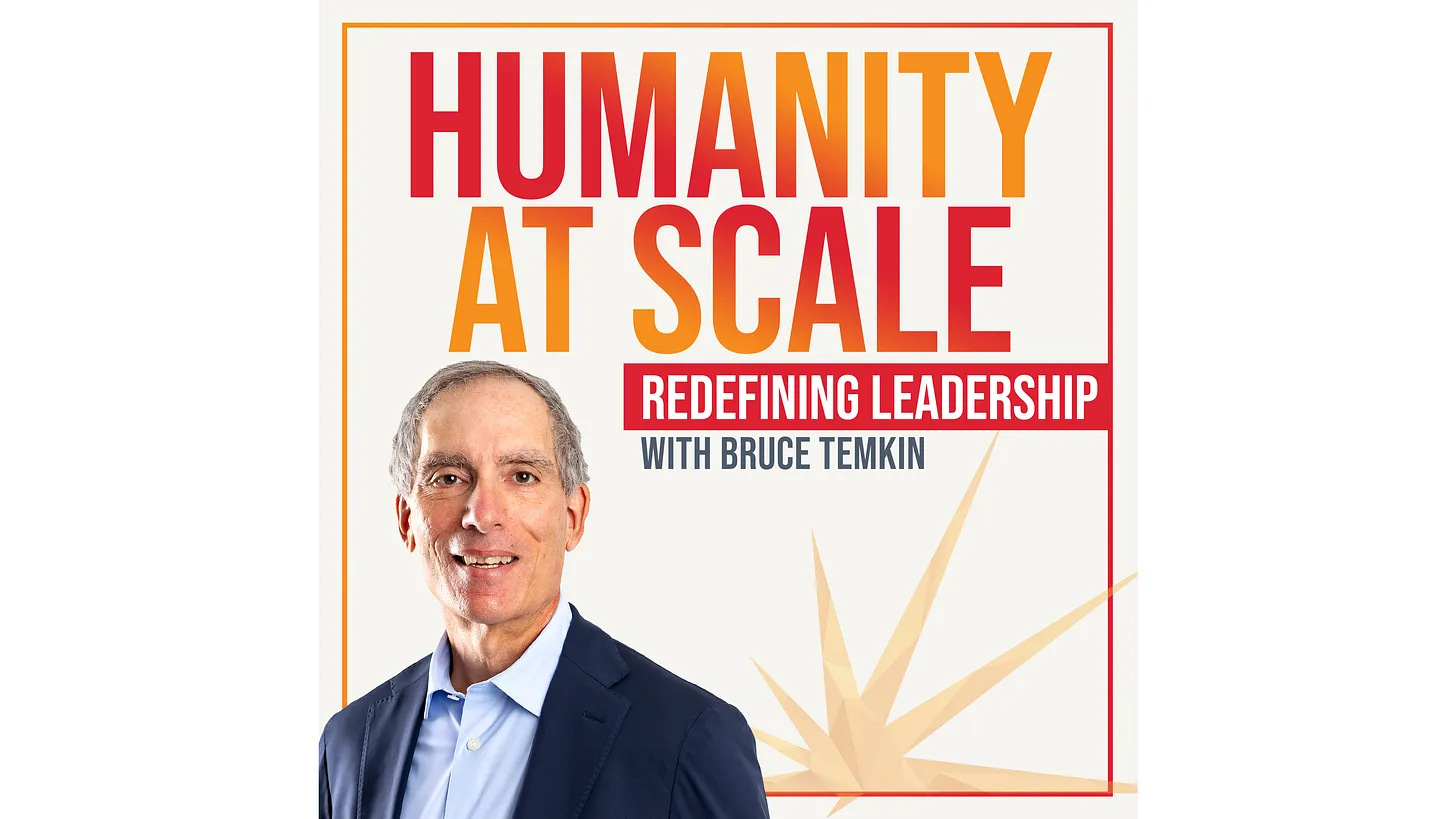
Available on Apple Podcasts, Spotify, and YouTube.
Make sure to check out my podcast, where I reimagine leadership for today’s dynamic world—proving that true success begins with prioritizing people, including employees, customers, and the communities you serve. From candid conversations with executives to breakthrough insights from experts, Humanity at Scale: Redefining Leadership Podcast is your ultimate guide to leading with purpose and empathy.
Check out the latest episodes:
Leading Habitat for Humanity: Purpose, Service, and Faith with Jonathan Reckford
Confidence Isn’t Competence: Better Decision Systems With Melina Moleskis
Sense-Making Through Uncertainty: Stories, Signals, and Swarms with Dave Snowden
Scaling White-Glove Service: Sweetwater's $2 Billion Success Story with Mike Clem
The Myth of Deep Beliefs: Leading in a World of Improvisation with Nick Chater
Available on Apple Podcasts, Spotify, and YouTube.
Bruce Temkin is a founding architect of the global movement around Customer Experience, Employee Experience, and Experience Management. Often called the “Godfather of Customer Experience,” he has long challenged leaders to see purpose, empathy, and trust not as soft ideals, but as essential drivers of long-term success.
Today, he leads the Humanity at Scale movement, helping organizations succeed by keeping how people think, feel, and act at the center of every decision, even as AI, complexity, and constant change push in the opposite direction.
If you're a leader wrestling with how to stay human as everything speeds up, Bruce is available for keynote presentations that challenge conventional thinking and energize organizations to drive meaningful change.
Bruce, we speak the same language on both the gaps and the new thinking. Thanks for laying this out so clearly and practically — it captures exactly where so many CX teams are stuck and what has to change for the work to truly make an impact.