
When AI Does the Entry Level Work, How Will People Learn?
Building Future-Ready Expertise With AI-Partnered Apprenticeship

I keep seeing leaders talk about all the work AI can take off people’s plates. And a lot of it makes sense: first drafts, research summaries, meeting notes, data clean-up, basic analysis.
But here’s what worries me: a lot of that work was also how people learned.
It gave them reps. It helped them see what good looked like. It exposed them to messy problems before they were expected to handle bigger ones.
So the answer isn’t to protect every old task. It’s to rethink how people build expertise as AI becomes part of the work.
That’s what this week’s article is about: AI-Partnered Apprenticeship, a model for using AI to strengthen, not replace, the way people learn.
I hope you enjoy this edition. If you do, I’d love for you to subscribe and share it with others who might benefit. Let’s dive in.
🔥 SPARK OF THE WEEK
People stop sharing the truth when honesty feels risky
Where are people in your organization holding back because the reaction feels too costly?
When people soften bad news, delay concerns, or wait until after the meeting to say what they really think, it’s usually not because they don’t care. It’s because they’ve learned that honesty carries risk. That hidden caution creates social friction. Truth moves slower. Decisions get heavier. Collaboration becomes more performative. The best leaders don’t just ask people to be honest. They create the conditions where honesty feels safe enough to be useful.
👉 Read more: “Social Friction: The Obstacle To Truth and Collaboration”

Building Future-Ready Expertise With AI-Partnered Apprenticeship
Leaders are moving quickly to use AI for the work that is easiest to automate. First drafts. Research summaries. Meeting notes. Customer response templates. Data clean-up. Basic analysis. Document review. Coding support.
That makes sense. Much of that work has been slow, repetitive, and expensive.
But there is something important hidden inside those tasks. A lot of what we call “entry-level work” was never just about producing the output. It was also how people learned. It gave them exposure to real problems, repeated practice with imperfect information, feedback from more experienced people, and the chance to build judgment before the stakes got too high.
That is the leadership challenge AI is creating.
The issue is not whether AI should take over more routine work. It will, and in many cases it should. The leadership opportunity is to preserve the apprenticeship that was hidden inside the work, while using AI to make that learning more intentional, focused, and powerful.
The Entry-Level Work Was Never Just Work
For decades, organizations relied on an informal apprenticeship system built into the work itself. Junior people drafted, summarized, reviewed, analyzed, cleaned up, checked, compared, and prepared. Some of that work was tedious. Some of it was inefficient. Some of it should have been redesigned long ago.
But it also gave people reps.
A junior analyst learned which numbers mattered by working through the spreadsheet. A new lawyer learned how risk hides in language by reviewing documents. A young marketer learned how customers respond by drafting messages and seeing what worked. A new product manager learned what users really needed by reading raw feedback, not just polished summaries.
The work did not always look developmental. But often, it was.
It built pattern recognition. People learn by seeing enough examples to notice what repeats, what changes, and what deserves attention. AI can summarize patterns quickly, but people still need enough exposure to develop their own sense of what matters.
It created low-risk mistakes. Early-career work gave people room to be wrong before the stakes became too high. A weak draft, a missed assumption, or an incomplete analysis could become a coaching moment rather than a major failure.
It exposed people to context. Raw work carries signals that polished outputs often remove. Customer frustration, operational confusion, political tension, vague requirements, and competing priorities all teach people how organizations really operate.
It showed what good looks like. People develop standards by comparing their work with the work of more experienced people. They learn what gets tightened, what gets questioned, what gets ignored, and what gets elevated.
It helped people earn confidence. Real confidence does not come from sounding smart. It comes from struggling with real work, getting feedback, improving, and slowly learning that you can handle more complexity.
The Case for a New Apprenticeship Model
The old apprenticeship system was never as intentional as it should have been. Some people got strong managers, meaningful assignments, useful feedback, and real exposure to how experienced people think. Others got disconnected tasks, limited coaching, and years of activity that did not build much depth.
AI makes the old model unsustainable. If apprenticeship used to happen by chance, it now needs to happen by design. An updated apprenticeship model can:
Design learning more purposefully. Leaders need to be clearer about what each assignment is meant to teach, not just what output it is meant to produce.
Use AI to speed up growth. AI can help people see more examples, test more ideas, compare different approaches, and get faster feedback.
Keep people close to real problems. Early-career employees still need exposure to customers, operations, raw feedback, messy data, and real tradeoffs.
Build judgment, not just output. The goal is not to help people finish work faster. It is to help them understand what matters, what is missing, and what choices deserve human care.
Introducing AI-Partnered Apprenticeship
The old question was: What work can we automate?
The better question is: What expertise was this work helping people build, and how will we build it now?
That question is the foundation for a new model called “AI-Partnered Apprenticeship,” which I define as:
A purposefully designed developmental model for accelerating how people build the skills, knowledge, and expertise future work will require.
This model is not about preserving busywork. It’s not about slowing down AI. It’s not about forcing people to do outdated tasks just because previous generations did them.
It’s about designing a better learning system for a world where AI is part of the work from the beginning. The goal is to make development more intentional, more adaptive, and more connected to the kind of expertise people will actually need next.
Here are the five foundations of the model:
Learning Roadmap. Apprenticeship should start with a clear map of what people need to learn over time, not just a list of tasks they need to complete. For an analyst, that might mean moving from producing accurate reports to spotting anomalies, explaining business implications, and recommending tradeoffs. For a customer experience role, it might mean moving from summarizing feedback to identifying root causes, recognizing emotional patterns, and seeing where processes break down. The roadmap should make development visible, so leaders can see whether someone is building the technical skill, contextual understanding, pattern recognition, confidence, and judgment that future work will require.
Capability-Building Work. Every meaningful assignment should have two goals: produce useful output and build a specific kind of learning. A junior employee preparing a customer issue summary should not only describe what happened. The assignment should also help them identify what the customer was feeling, what part of the system created the friction, and what decision might prevent the issue from recurring. A first draft should not just be something AI helps polish. It should become a way to practice structure, logic, tone, and judgment. The design question is simple: what should this work help the person understand that they did not understand before?
Accelerated Practice Lab. AI can make apprenticeship more powerful by giving people more reps than the old model allowed. Someone learning to write recommendations can compare multiple drafts, test different arguments, ask for critiques, and see how small changes affect clarity. Someone learning to handle difficult customer situations can practice with simulated scenarios before facing the real thing. Someone learning strategy can test assumptions, explore alternative paths, and compare how different stakeholders might react. The point is not to make learning artificial. It is to create more chances for people to try, compare, revise, and improve before the stakes get too high.
Adaptable Growth Path. Apprenticeship should adjust as people develop. One person may need more practice framing problems. Another may need more exposure to customers. Another may be technically strong but weak at explaining tradeoffs. AI can help reveal patterns in someone’s work, but leaders still need to use that insight to shape the next assignment, the next practice rep, and the next coaching conversation. The growth path should become more personal and dynamic, so people are stretched in the places where they most need to grow.
Active Coaching Cadence. Managers need regular moments to turn work into learning. That means reviewing not just the final output, but the person’s reasoning, the prompts they used, the assumptions they made, the AI suggestions they accepted or rejected, and the context they considered. A manager might ask, “What did you see that the tool missed?” or “Why did you trust this recommendation?” or “What would change if the customer, employee, or frontline team saw this differently?” Coaching should not be an occasional add-on to the work. It should become the rhythm that helps people understand how stronger judgment develops.
Sparking New Leadership Thinking
AI-Partnered Apprenticeship will not emerge on its own. Leaders need to decide where the old learning path is breaking down and where a more intentional model can help people build future-ready expertise. Here are five ways to begin:
Audit the work that is changing fastest. Start by looking at the entry-level tasks already being automated, compressed, or redesigned. The important question is not just how much time AI saves, but what people used to learn by doing that work. A research summary may have helped someone learn how to separate useful signals from noise. A customer complaint review may have helped someone see where systems create friction. A first draft may have helped someone practice structure, logic, and tone. Leaders need to know which productivity gains are also removing important learning experiences.
Define the expertise the future will require. The goal is not to develop people into experts who simply do today’s work the old way. Future expertise will look different because AI will already be part of the work. An analyst may need to spend less time building reports from scratch and more time questioning the data, spotting weak signals, and explaining tradeoffs. A manager may need less skill in gathering information and more skill in making sense of conflicting inputs. Leaders need to describe what strong judgment will look like in the work ahead, not just what strong performance looked like in the past.
Find the places where learning is most at risk. The biggest danger is not that every task changes. The danger is that certain tasks disappear before leaders realize how much development was attached to them. If junior employees no longer review raw feedback, they may lose exposure to customer emotion. If they no longer build first-pass analyses, they may miss the chance to wrestle with messy data. If they only receive polished AI outputs, they may not learn how much ambiguity sits underneath the answer. Leaders should identify the roles, tasks, and career stages where the learning path is becoming thinnest.
Pilot the model inside real work. AI-Partnered Apprenticeship should not be launched as a training program disconnected from the business. It should be tested inside the teams where work is already changing. Pick a role where early-career development matters, redesign a few assignments with clear learning goals, add faster practice and feedback loops, and give managers simple coaching routines. The best pilots will not ask people to leave the work in order to learn. They will make the work itself a better place for learning.
Hold leaders accountable for building capability. Leaders will naturally track whether AI makes work faster, cheaper, or easier to scale. But those measures are not enough. They also need to know whether people are becoming more capable as the work changes. Are employees asking better questions? Are they challenging weak outputs? Are they spotting missing context? Are they explaining tradeoffs more clearly? Are they moving into more complex work with greater confidence? If organizations only reward speed and efficiency, managers may unintentionally automate away the experiences that build future strength.
The Bottom Line
AI will change the early work where many people used to learn, but it does not have to weaken the path to expertise. Leaders have a choice: let apprenticeship fade as routine tasks disappear, or redesign it so people build future-ready skills, knowledge, and judgment faster. The organizations that get this right will not just use AI to do more work; they will use it to develop stronger people.
Humanity At Scale: Redefining Leadership Podcast
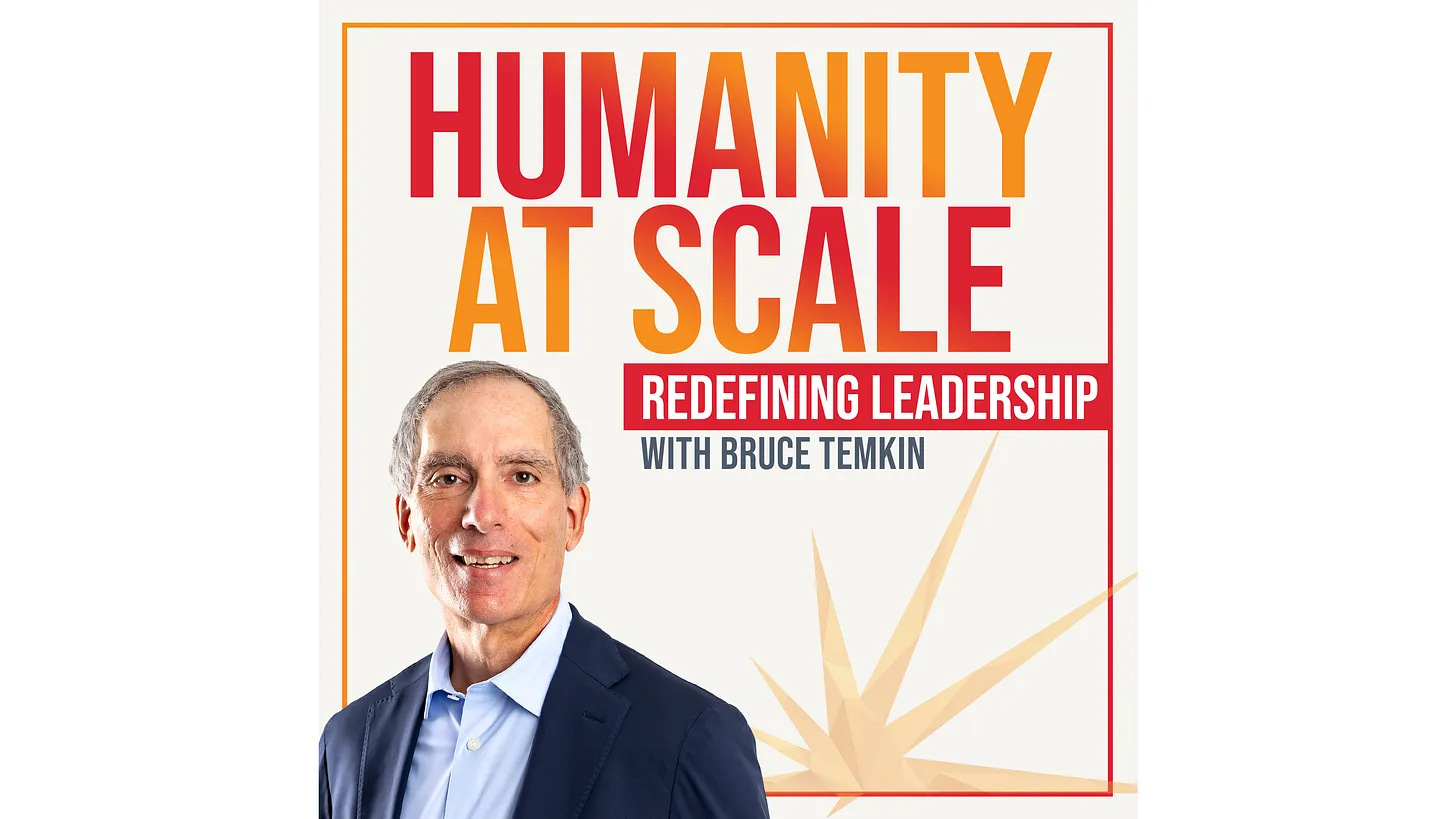
Make sure to check out my podcast, where I reimagine leadership for today’s dynamic world—proving that true success begins with prioritizing people, including employees, customers, and the communities you serve. From candid conversations with executives to breakthrough insights from experts, Humanity at Scale: Redefining Leadership Podcast is your ultimate guide to leading with purpose and empathy.
Check out the latest episodes:
Leading Habitat for Humanity: Purpose, Service, and Faith with Jonathan Reckford
Confidence Isn’t Competence: Better Decision Systems With Melina Moleskis
Sense-Making Through Uncertainty: Stories, Signals, and Swarms with Dave Snowden
Scaling White-Glove Service: Sweetwater’s $2 Billion Success Story with Mike Clem
The Myth of Deep Beliefs: Leading in a World of Improvisation with Nick Chater
Available on Apple Podcasts, Spotify, and YouTube.
Bruce Temkin is a founding architect of the global movement around Customer Experience, Employee Experience, and Experience Management. Often called the “Godfather of Customer Experience,” he has long challenged leaders to see purpose, empathy, and trust not as soft ideals, but as essential drivers of long-term success.
Today, he leads the Humanity at Scale movement, helping organizations succeed by keeping how people think, feel, and act at the center of every decision, even as AI, complexity, and constant change push in the opposite direction.
If you're a leader wrestling with how to stay human as everything speeds up, Bruce is available for keynote presentations that challenge conventional thinking and energize organizations to drive meaningful change.