
What Can Leaders Learn From Stephen Colbert’s Goodbye?
Six Leadership Lessons In Stephen Colbert’s Final Act

I’ve been a big fan of Stephen Colbert for a long time.
Part of it was the writing. Part of it was the delivery. Few people can combine intelligence, timing, curiosity, absurdity, and sharp cultural observation as naturally as he could. But what always stood out most to me was his ability to shine a light on difficult topics with humor. He could make people laugh while also helping them process contradiction, hypocrisy, uncertainty, and the growing gap between public language and lived reality.
That is part of why the ending of The Late Show with Stephen Colbert felt bigger than the cancellation of a television program.
As I watched the final stretch of the show, I realized there were actually a surprising number of leadership lessons embedded in the way Colbert built, led, and ultimately closed out this chapter of The Late Show.
Whether you loved Colbert’s politics, hated them, or mostly avoided them, I hope the article lands on something broader than partisanship. It’s really about what leaders can learn from a person who built a strong culture, elevated his team, used humor to surface uncomfortable truths, and handled an ending with grace.
Please subscribe and share the newsletter with others.
🔥 SPARK OF THE WEEK
We quickly rationalize our own poor behavior, but often judge others as if they have no excuse
Where are you judging someone’s behavior without understanding what shaped it?
When we fall short, we usually know the backstory: the pressure, confusion, bad timing, or competing priorities. But when someone else misses the mark, we often see only the behavior and turn it into a judgment about who they are. That’s what behavioral scientists call fundamental attribution error: explaining others by character while explaining ourselves by circumstance. Better leadership starts by pausing before turning someone’s bad moment into their whole story.
👉 Read: “Fundamental Attribution Error: Why We Often Misjudge Each Other”

Six Leadership Lessons In Stephen Colbert’s Final Act
On May 21, 2026, the lights went down at the Ed Sullivan Theater for the last time. After 11 seasons, 1,801 episodes, dozens of Emmy nominations, and years at the top of late night, The Late Show with Stephen Colbert aired its final broadcast. Paul McCartney closed the evening with “Hello, Goodbye,” a fittingly bittersweet ending for a show with deep roots in television history.
The moment felt bigger than one host leaving one show.
Colbert was not ending a startup experiment or a short-lived entertainment property. He was closing a chapter in the legacy of The Late Show, a franchise shaped by David Letterman, carried forward by CBS, and built around the idea that late night could be funny, smart, strange, topical, and culturally relevant all at once.
That is why the ending landed with more weight than a typical cancellation.
The circumstances were complicated: financial pressures, corporate politics, and a changing media landscape that has made nightly television harder to sustain. But the way Colbert built, led, and ended the show offers something worth paying attention to.
Observations From The Late Show’s Ending
The ending of The Late Show was not just a media story. It was a surprisingly rich case study in leadership, culture, institutions, and human behavior.
What made the moment so interesting was not simply that a successful show ended. It was the combination of things surrounding it: a deeply admired host, a loyal audience, a visible and emotionally connected team, corporate pressures behind the scenes, and the closing of one of the last large-scale shared cultural experiences.
Taken together, the ending revealed a set of dynamics that extend far beyond television.
Here are six observations that stood out most to me.
Observation 1: He Built A Joy Machine
Before the finale began, Colbert addressed his audience and his staff with a simple phrase: “We call it the Joy Machine.” He explained that to produce that many shows, it had to be a machine; but one that ran on joy rather than obligation.
That framing matters because most organizations describe culture in lifeless corporate language. Values statements. Leadership principles. Posters on walls. Colbert gave his culture a name people could actually feel.
Here are several things leaders should notice about the “Joy Machine” idea:
Culture needs a name people can feel.
A machine can be disciplined without becoming soulless.
Joy can be part of the operating model, not a break from the work.
Sustained performance depends on the conditions around the work.
People protect what leaders clearly name and honor.
Takeaway: People sustain hard work longer when the culture feels human.
Observation 2: He Led With The 200, Not The One
From the moment the cancellation was announced, Colbert consistently redirected attention away from himself and toward his staff.
At the 2025 Emmy Awards, he said: “The people who do the show every day teach me what it’s like to be a professional. I get all the applause and I get all the fame — and I’m fine with that — but I also want them to feel the recognition.”
That instinct is rarer than it should be.
Modern organizations increasingly revolve around visible personalities: CEOs, founders, influencers, star performers. Meanwhile, the people carrying the daily emotional and operational weight of the organization often remain invisible.
Here are several things leaders should notice about Colbert’s instinct to center the team:
Recognition tells people their work matters.
Public credit shapes private culture.
Leaders build trust when they share the spotlight.
People give more when they feel genuinely seen.
The strongest teams feel like shared achievements, not personal brands.
Takeaway: People give more when their work is noticed and valued.
Observation 3: Satire Is A Truth-Telling System
Colbert was not just a comedian. He was a satirist.
That distinction matters. Comedy entertains, but satire does something more pointed: it exposes what powerful people and institutions would often rather smooth over.
Satire works because it reconnects public language to lived reality. It points out the gap between what people are being told and what they can plainly see. It says out loud what many people are already thinking privately.
Here are several reasons satire plays such an important role in healthy systems:
It shows where the official story does not match reality.
It makes uncomfortable truths easier to absorb.
It punctures the insulation that builds up around power.
It helps people feel less alone in what they are noticing.
It surfaces warning signs before institutions are ready to admit them.
Takeaway: Satire helps people see the truth when power tries to smooth it over.
Observation 4: Shared Rituals Still Matter
For more than a decade, millions of people ended their day with the same voice, the same desk, the same band, and the same rhythm.
That kind of shared experience is becoming rare.
Modern life is increasingly fragmented into personalized feeds, algorithmic media streams, remote work patterns, and individualized realities. People are often consuming different information, reacting to different stories, and living inside different emotional contexts.
Shared rituals matter because they give people something common to return to.
Here are several things leaders should notice about shared experiences:
They give people common moments to remember.
They create familiar rhythms during uncertain times.
They help people feel connected to something larger than themselves.
They make culture feel lived, not just stated.
They weaken when leaders treat rituals as optional extras.
Takeaway: Shared experiences help people feel connected in a fragmented world.
Observation 5: Institutions Drift When They Don’t Protect Their Ideals
CBS described the cancellation as “purely a financial decision.” Perhaps it was.
But the broader circumstances around the ending revealed something familiar about organizational life: institutions rarely abandon their ideals in one dramatic moment. They move away from them slowly, through pressure, incentives, compromises, and accommodations that can each seem reasonable on their own.
That pattern exists everywhere.
Media organizations drift. Governments drift. Companies drift. Leadership teams drift.
Here are several things leaders should notice about institutional drift:
Outside pressures slowly reshape what the organization protects.
Small accommodations can quietly change the character of an institution.
Protecting the organization can start to replace serving the mission.
People quickly get used to gaps between stated values and daily behavior.
Drift gets worse when everyone sees it but no one names it.
Takeaway: Institutions drift away from their ideals one accommodation at a time.
Observation 6: Endings Give Meaning To The Work
Endings matter because they shape how people make sense of what came before.
When something important ends, people look backward. They reassess the experience. They notice what was honored, what was ignored, who was recognized, and whether the ending felt consistent with everything the work had claimed to stand for.
Colbert handled the closing stretch with that larger responsibility in mind. He stayed funny, but did not make it trivial. He acknowledged disappointment, but did not let resentment take over. He celebrated the team, the audience, and the history of the show in a way that reinforced what the show had always been trying to create.
Here are several things leaders should notice about endings:
Endings make people look back at the whole journey.
The final stretch shows what leaders believe mattered most.
What leaders choose to honor tells people what was truly valued.
Leaders shape whether the ending feels respectful or resentful.
Ending well helps people leave with meaning, not just loss.
Takeaway: Endings shape how the past is remembered.
Sparking New Leadership Thinking
What can leaders take from Colbert’s example, and from the circumstances surrounding the show’s ending?
Here are five reflections worth considering:
Turn culture into something people can feel and return to. Colbert’s “Joy Machine” worked because it made the culture feel concrete. Leaders can do the same by naming the experience they want people to create together, then reinforcing it through rituals people would miss if they disappeared: the weekly story, the no-surprises meeting, the customer-first tradeoff, or the closing reflection that reminds people why the work matters.
Make recognition part of the operating rhythm. Don’t wait for the farewell, the award, or the crisis to acknowledge the people carrying the work. Build it into staff meetings, project reviews, customer stories, launch retrospectives, and leadership updates so people regularly hear whose effort made progress possible.
Protect the people who name what others avoid. Every organization needs voices that expose contradictions before they harden into dysfunction. That might mean inviting the skeptical person into planning early, asking frontline teams what leaders are missing, or creating forums where people can safely say, “That’s not what customers or employees are actually experiencing.”
Treat endings as part of the work. Projects, roles, teams, and eras end all the time. Leaders can close them well by naming what was accomplished, recognizing who carried the work, being honest about disappointment, and giving people a clear sense of what should be carried forward.
Audit where your ideals are drifting. Look closely at the decisions where leaders start saying things like “we don’t have a choice,” “it’s just this once,” or “this is how the industry works.” Pay attention to the policies, partnerships, hiring decisions, and tradeoffs that quietly move the organization away from what it claims to stand for.
The Bottom Line
Colbert’s run showed that leadership is remembered less by the spotlight someone holds than by the humanity they create around it. The best leaders build cultures people can feel, protect truths others avoid, and end in ways that honor what mattered.
Humanity At Scale: Redefining Leadership Podcast
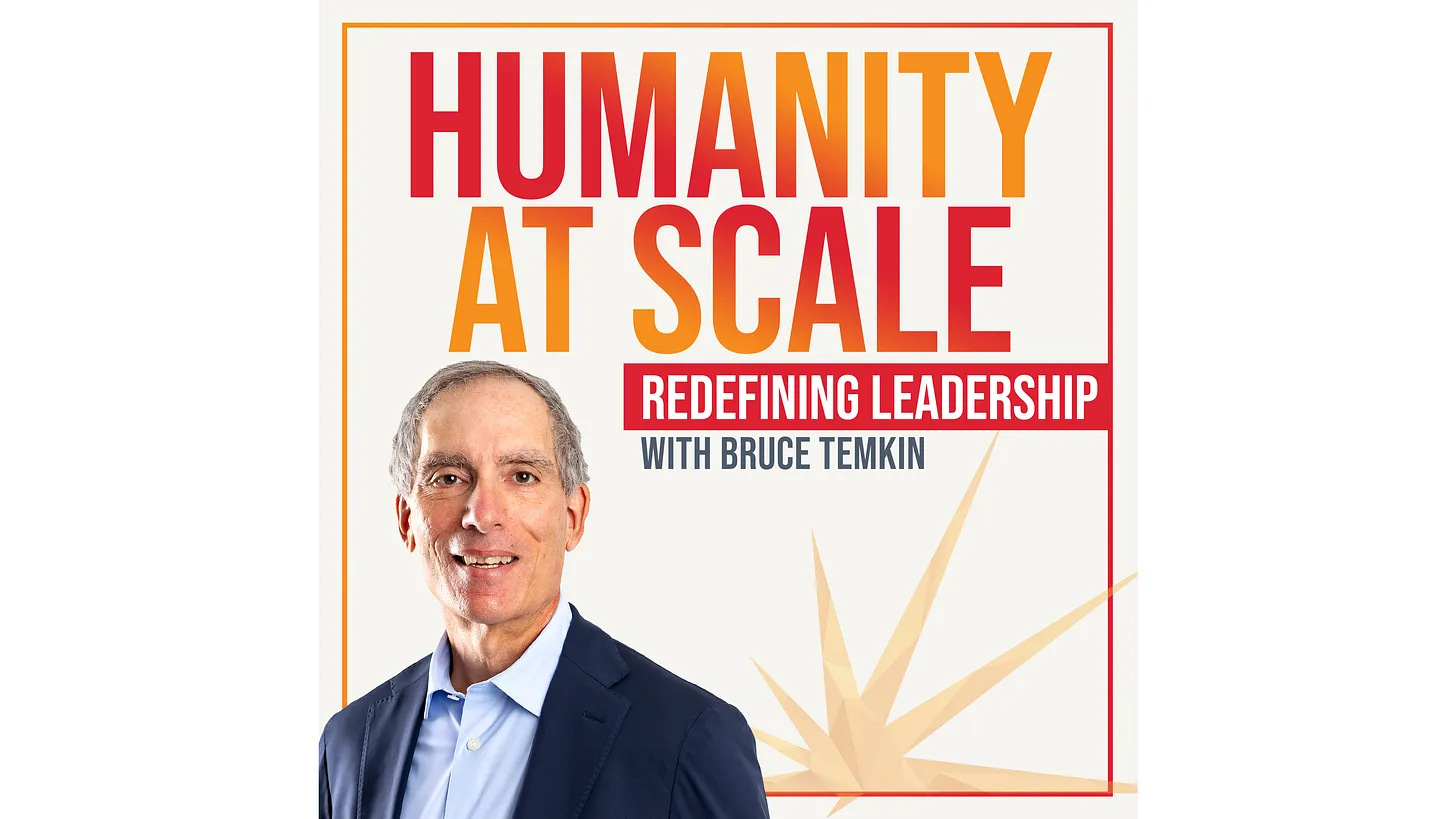
Make sure to check out my podcast, where I reimagine leadership for today’s dynamic world—proving that true success begins with prioritizing people, including employees, customers, and the communities you serve. From candid conversations with executives to breakthrough insights from experts, Humanity at Scale: Redefining Leadership Podcast is your ultimate guide to leading with purpose and empathy.
Check out the latest episodes:
Leading Habitat for Humanity: Purpose, Service, and Faith with Jonathan Reckford
Confidence Isn’t Competence: Better Decision Systems With Melina Moleskis
Sense-Making Through Uncertainty: Stories, Signals, and Swarms with Dave Snowden
Scaling White-Glove Service: Sweetwater’s $2 Billion Success Story with Mike Clem
The Myth of Deep Beliefs: Leading in a World of Improvisation with Nick Chater
Available on Apple Podcasts, Spotify, and YouTube.
Bruce Temkin is a founding architect of the global movement around Customer Experience, Employee Experience, and Experience Management. Often called the “Godfather of Customer Experience,” he has long challenged leaders to see purpose, empathy, and trust not as soft ideals, but as essential drivers of long-term success.
Today, he leads the Humanity at Scale movement, helping organizations succeed by keeping how people think, feel, and act at the center of every decision, even as AI, complexity, and constant change push in the opposite direction.
If you're a leader wrestling with how to stay human as everything speeds up, Bruce is available for keynote presentations that challenge conventional thinking and energize organizations to drive meaningful change.
Bruce's summation of Stephen Colbert's final act is an excellent and insightful analysis of leadership skills for anyone. This is a gem of an article!