
Does Your Team Correct Each Other Before Problems Spread?
Peer Accountability: How Great Teams Uphold Performance Standards

Every leader has felt the moment when performance begins to slip. The energy dips, small mistakes start stacking up, or people hesitate, waiting for someone else to step in. Most teams respond by leaning harder on managers or hoping individuals will self-correct. A few do something different: they uphold the standard together, in real time, without waiting for authority.
That capability is one of the six characteristics of great teams I’ve been writing about; a discipline I call Peer Accountability. It’s the ability for teammates to protect performance standards by correcting each other early and honestly. And it’s the difference between teams that drift under pressure and those that reset quickly because everyone feels responsible for maintaining performance.
This will matter even more as work becomes less defined by roles and more by contribution—an idea that came up clearly in my recent Humanity at Scale podcast conversation with Ravin Jesuthasan, Why Skills Beat Job Titles: How AI Is Reshaping Work.
I hope you enjoy this edition. If you do, I’d love for you to subscribe and share it with others who might benefit. Let’s dive in.
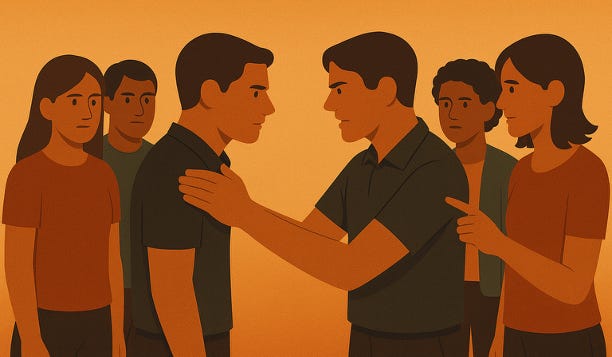
Peer Accountability: How Great Teams Uphold Performance Standards
In Game 6 of the 2024 Stanley Cup Final, the Florida Panthers hit a shaky stretch: two missed assignments, a sloppy change, and momentum slipping fast. Before the coaches reacted, Aleksander Barkov gathered his linemates with a quick look and a few firm words. No drama. No speeches. Just a subtle reset.
On the next shift, their structure snapped back into place. To the crowd, it looked like a momentum swing. To the players, it was maintenance.
This quick, internal reset is part of what I call Peer Accountability, one of the six characteristics of great teams I’ve written about. It isn’t about hierarchy or authority. It’s about teammates protecting the standard together, and creating a system where excellence is reinforced by the people who rely on it most.
Why Peer Accountability Matters
Every great team faces moments when standards slip: effort dips, focus wavers, energy thins, or small mistakes begin to stack. Teams that rely only on top-down correction grow dependent and passive. Teams that rely solely on individual discipline become inconsistent and isolated. Peer Accountability offers a third path: teams upholding the standard together, in real time.
Here’s what it provides for teams:
Prevents drift before it becomes damage. When teammates correct each other early, slippage doesn’t accumulate. That’s why the Florida Panthers reset instantly after mistakes: players stepped in before coaches needed to, stopping momentum from tilting in the wrong direction.
Makes honesty normal instead of risky. When feedback flows sideways, people don’t wait for permission to speak up. The Australian Women’s Cricket Team used player-led reviews to normalize candor, allowing younger players to challenge veterans without destabilizing the culture.
Decentralizes responsibility. Teams with strong peer accountability don’t outsource leadership; they distribute it. On the late-’90s Yankees, course corrections came from Jeter, Posada, or whoever saw the gap first; decisions happened at the point of need, not the top of the hierarchy.
Strengthens commitment under pressure. People push harder when they know their teammates are relying on them, and will call them back to the standard if they waver. That shared obligation fuels resilience, keeping teams aligned and assertive even when the environment gets chaotic.
The Human Power Behind Peer Accountability
Peer Accountability isn’t a tool you impose, it’s a social dynamic you nurture. It emerges from fundamental human behaviors: how people interpret norms, respond to peers, regulate emotion, and protect their standing within a group.
Clarity reduces social friction. When standards are explicit and observable, feedback feels fair rather than personal. Ambiguity creates defensiveness: people don’t know whether they’re being corrected for expectations or preferences. Clear expectations allow the brain to interpret peer feedback as alignment, not threat.
Belonging strengthens responsiveness. We are far more influenced by people we identify with. When teammates feel connected and interdependent, peer corrections land as support rather than criticism. Social neuroscience shows that belonging increases receptivity and reduces the emotional sting of corrective feedback.
Norms shape behavior faster than rules. Humans adopt the behaviors they see around them, especially in high-trust groups. When peers model effort, intensity, or discipline—and reinforce it in each other—standards become self-maintaining. The environment cues the behavior before authority ever needs to.
Mutual dependence makes accountability durable. When people know their actions affect teammates directly, responsibility becomes relational rather than individual. Performance isn’t just “my job,” it’s a commitment to the person beside me. That interdependence is what turns accountability into shared ownership instead of top-down pressure.
The Anatomy of Peer Accountability
Peer accountability may look like “speaking up,” but in great teams it’s much more structured and intentional. It rests on a set of behavioral ingredients that make honesty normal and alignment automatic.
Clear shared standards. Everyone understands what “good” looks like—effort, communication, preparation, recovery—and those expectations are explicit, not assumed. The USWNT made these standards so visible that even practice scrimmages carried championship-level intensity.
Mutual permission to challenge. Teammates know they’re allowed—even expected—to confront lapses, regardless of rank or reputation. This is what made Australia’s cricket reviews so powerful: a rookie could challenge a veteran without disrupting the culture.
Truth spoken without threat. Feedback is direct but not demeaning. On the late-’90s Yankees, veterans like Jeter and Posada reset tone and focus without shaming teammates. The goal wasn’t blame—it was alignment.
Contribution over compliance. Accountability is forward-looking. Instead of punishing errors, teammates ask, “What does the team need from us right now?” That framing reduces defensiveness and keeps attention on collective performance.
Sparking New Leadership Thinking
Here are five ways leaders can cultivate the conditions where peer accountability thrives:
Translate standards into observable actions. Instead of vague values, great teams define concrete behaviors teammates can see and reinforce: sprint the transition, communicate the switch, finish the play. When accountability is tied to actions, not abstractions, peers can hold each other to it confidently.
Model being held accountable. When leaders accept feedback publicly, they de-risk honesty for everyone else. At UConn, Geno Auriemma regularly invited players to push back on decisions, signaling that accountability flows both ways.
Address small slippages early. Great teams treat minor lapses as early warning signals. By correcting issues quickly—like the Panthers did—teams prevent cultural drift long before it becomes a pattern.
Build peer-led rituals. Player-driven film reviews, rotating captains, and peer debriefs all normalize horizontal accountability. These rituals strengthen the culture far more than top-down speeches.
Separate accountability from blame. Peer accountability only works in environments where honesty doesn’t equal punishment. When the focus is on restoring alignment—not assigning fault—people speak up faster and more consistently.
The Bottom Line
Great teams don’t thrive through command-and-control or silent independence. They thrive when teammates safeguard the standard together. Peer Accountability makes performance resilient, not situational, by ensuring the standard lives between people, not above them.
Additional Resources
Here’s some relevant content that you may find interesting:
The Art Of Winning: Lessons From Dominant Sports Teams. In this Humanity At Scale article, I take a closer look at 10 winning teams, from the All Blacks to the USWNT to UConn basketball, and surface the hidden dynamics that fueled their dominance.
No Dickheads Allowed: Exploring All Blacks Winning Culture. On this episode of the Humanity at Scale podcast, James Kerr, bestselling author of Legacy, unpacks the 15 mantras that capture the ethos of the All Blacks, New Zealand’s legendary rugby team, with an 80% win rate across 125 years.
Humanity At Scale: Redefining Leadership Podcast
Make sure to check out my podcast, where I reimagine leadership for today’s dynamic world—proving that true success begins with prioritizing people, including employees, customers, and the communities you serve. From candid conversations with executives to breakthrough insights from experts, Humanity at Scale: Redefining Leadership Podcast is your ultimate guide to leading with purpose and empathy.
Check out the latest episodes:
Why Skills Beat Job Titles: How AI Is Reshaping Work with Ravin Jesuthasan
The Humanity Code: Teaching AI What Matters Most with Heidi Lorenzen
Redefining Leadership for Gen Z: Coaching, Connection, and Trust with Tim Elmore
Leading Under Fire: Ethical Clarity in Chaos with John Katsos
Awakened by Pajamas: Leading With Love and Self-Reflection With Genevieve Piturro
The podcast is available on Apple Podcasts, Spotify, and YouTube.
Bruce Temkin is a globally recognized thought leader who has spent his career transforming how organizations engage their stakeholders. Known as the “Godfather of Customer Experience,” he has shaped how companies worldwide approach purpose, trust, and empathy. Today he leads the Humanity at Scale movement, inspiring and empowering leaders to build human-centric organizations that achieve lasting success. He is available for keynote presentations that challenge conventional thinking and energize leaders to drive meaningful change.
Great observation, and thanks for sharing the story. Leaders, almost by definition, are removed from the details of the work, so their feedback and corrections often suffer from delay and/or precision.
Excellent piece on the distinction between dependence and distributed responsibility. The Barkov example captures something powerful about timing, catching slippge before it compounds instead of letting it snowball into a coaching intervention. I saw this same pattern on a project team last year where junior engineers started pulling each other into quick reviews without waiting for senior approval, dropped rework by like 40%. Point is real-time peer correction feels less threatning than delayed feedback.